English
  한국어
한국어  Deutsch
  Español
  العربية
  русский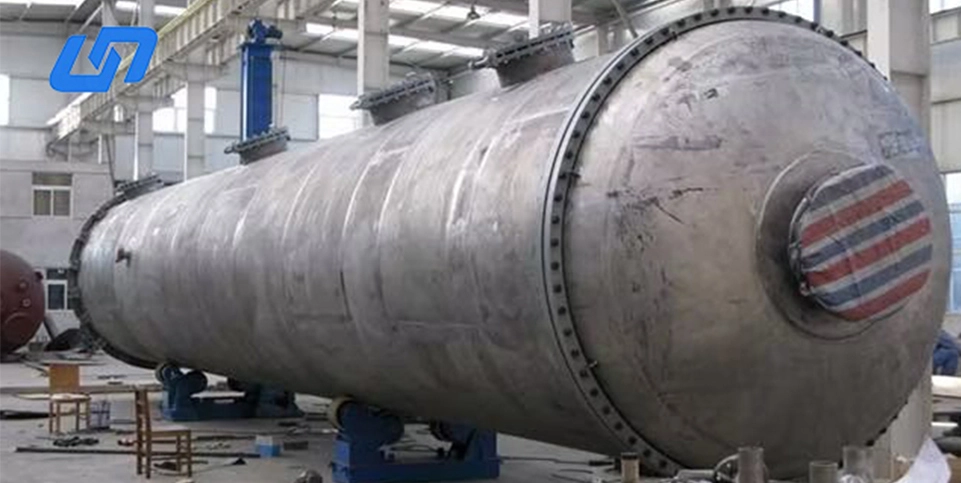
×
Titanium pipes offer a range of remarkable features that make them highly suitable for demanding applications in industries like heat exchange and nuclear power. Here's a breakdown of their key attributes and applications:
Plasticity & Ductility:
High-purity titanium pipes can exhibit elongation of 50-60% and a sectional contraction rate of 70-80%. While pure titanium has lower strength, alloying elements or impurities can significantly increase its strength without compromising plasticity. This allows for better forming and shaping during manufacturing.
High Strength-to-Weight Ratio:
Titanium has a specific strength (strength-to-weight ratio) that surpasses many materials, including steel. Its strength is comparable to steel, but its weight is only about 57% that of steel, making it ideal for applications where reducing weight is important.
Heat Resistance:
Titanium pipes maintain excellent strength and stability in high-temperature environments, up to 500°C. This makes them suitable for high-temperature applications like heat exchangers and power plants.
Low-Temperature Performance:
Titanium also excels at ultra-low temperatures, maintaining high impact strength and resilience even at temperatures as low as -250°C. This makes titanium pipes perfect for applications in cold climates or in industries requiring resistance to low-temperature environments.
Corrosion Resistance:
Titanium naturally forms a dense oxide film on its surface when exposed to oxygen, providing excellent protection against corrosion. This makes titanium pipes highly resistant to acids, alkalis, neutral saltwater, and oxidative environments—surpassing even stainless steel and other non-ferrous metals in many cases.
Heat Exchange Equipment:
Titanium pipes are widely used in various heat exchange systems, including shell and tube heat exchangers, coil heat exchangers, and serpentine tube heat exchangers, due to their excellent heat resistance and corrosion protection.
Condensers and Evaporators:
Titanium pipes are used in condensers and evaporators, providing long-lasting, efficient thermal transfer in corrosive environments.
Conveying Pipelines:
Titanium’s resistance to corrosion in harsh chemical environments makes it an ideal material for transporting fluids in industries such as chemical processing, nuclear power, and marine.
Nuclear Power:
Many nuclear power plants use titanium pipes as the standard for their units due to their superior corrosion resistance, high strength, and ability to withstand extreme conditions over long periods.
Titanium pipes are a preferred choice for industries that require high performance under challenging conditions, such as heat exchangers, nuclear power plants, and other critical fluid systems. Their lightweight, high strength, heat resistance, and corrosion resistance make them a versatile and reliable material for these applications.

No.26 Baotai Road, Weibin District, Baoji City, Shaanxi, China.
No.26 Baotai Road, Weibin District, Baoji City, Shaanxi, China.