English
  한국어
한국어  Deutsch
  Español
  العربية
  русский
×
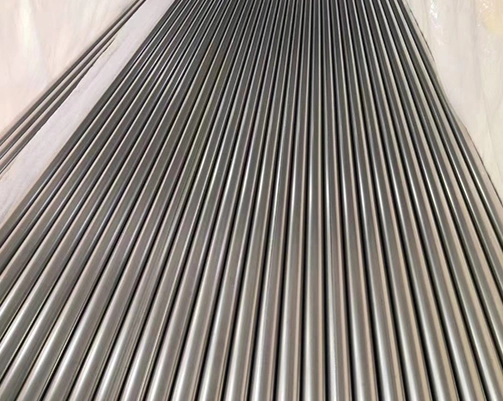
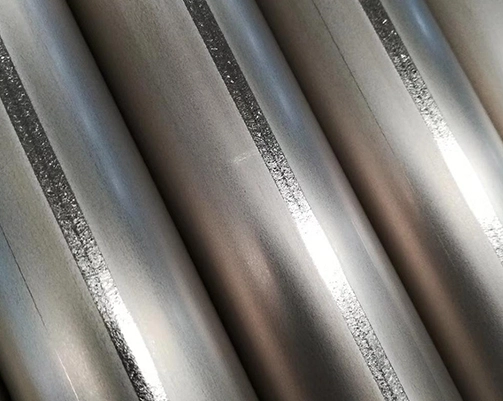
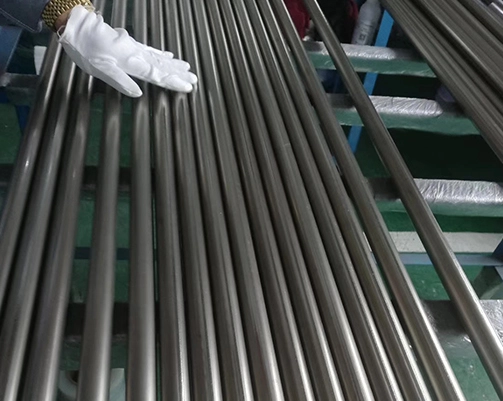
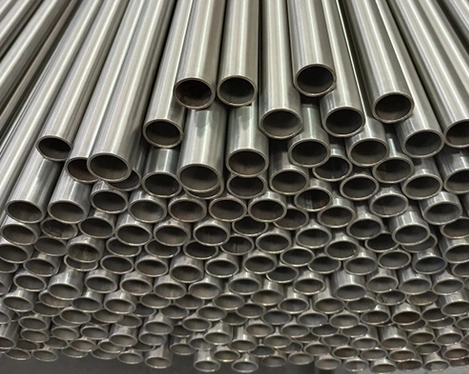
Compared to commonly used transportation pipelines, although welded titanium pipes have higher investment costs. However, due to its superior service life and maintenance cycle compared to other metal pipelines, welded titanium pipes have become the preferred pipe material in many industries to replace stainless steel pipes, copper nickel alloy pipes, and seamless titanium pipes.
Welded titanium pipes are made from titanium and its alloys using a plate rolling and welding process. These pipes combine the exceptional properties of titanium with the efficient production characteristics of welding technology. They are used in environments that demand high corrosion resistance, high strength, and high or low temperature resistance.
Lightweight and High Strength:
Titanium has a low density (around 4.5 g/cm³), making it ideal for lightweight designs without sacrificing strength.
Its strength-to-weight ratio is comparable to steel, offering superior performance in applications requiring both strength and reduced weight.
Corrosion Resistance:
Titanium performs excellently in aggressive environments, including seawater, chloride solutions, and acidic media.
A protective oxide layer forms naturally on titanium, enhancing its resistance to corrosion, especially in oxidative media.
High/Low Temperature Resistance:
Titanium’s working temperature range is from -250°C to 600°C, making it suitable for both cryogenic and high-temperature applications.
Biocompatibility:
Pure titanium (such as Grade 2) is highly biocompatible, making it suitable for medical implants and other biological applications.
Material Selection:
Common grades for welded titanium pipes include pure titanium (Grades 1-4) and titanium alloys (e.g., Ti-6Al-4V or Grade 5). These grades are selected based on the application’s requirements for corrosion resistance, strength, and temperature tolerance.
Welding Technologies:
Used for applications requiring high precision, especially in thin-walled pipes or for complex geometries.
Argon gas is used for shielding to prevent oxidation during high-temperature welding.
This process ensures precision and clean welds for titanium pipes.
TIG/GTAW Welding (Tungsten Inert Gas / Gas Tungsten Arc Welding):
Laser/Plasma Welding:
Post-Processing:
After welding, the pipes undergo acid pickling or polishing to remove the oxide layer formed during the welding process, restoring their corrosion resistance.
Quality Control:
Non-destructive testing (NDT) methods such as X-ray and ultrasonic inspection are used to detect internal defects, in compliance with ASTM standards (e.g., ASTM B862 and ASTM B338).
| Specification | Details |
|---|---|
| Size Range | 5 mm – 20,000 mm (Outside Diameter) |
| 0.5 mm – 50 mm (Wall Thickness) | |
| Max Length | 15 meters |
| Production Standards | ASTM B338, ASTM B862 |
Traditionally, copper alloy tubes were used in condenser units for seawater desalination. However, these materials were prone to corrosion, and rising copper prices increased costs.
Welded titanium pipes are now favored due to their excellent corrosion resistance in seawater, despite their higher initial cost. Titanium’s longevity reduces long-term maintenance costs, making it a more cost-effective solution in the long run.
Petrochemical Industry:
Coolers used in crude oil refining and P-Xylene production often involve corrosive conditions that make stainless steel unsuitable. Titanium’s resistance to pitting corrosion makes welded titanium pipes the preferred material in these high-risk environments.
In highly corrosive environments, titanium welded pipes ensure reliable operation of equipment, significantly reducing maintenance time and increasing the lifespan of the equipment.
Chemical Industry:
Titanium’s corrosion resistance is vital for many highly corrosive devices, where failure to use titanium welded pipes could lead to frequent breakdowns and maintenance issues. Titanium pipes ensure continuous operation with minimal downtime.
Corrosion Resistance: Outperforms traditional materials like stainless steel in seawater, acidic, and chlorine-rich environments.
Strength-to-Weight Ratio: Allows for lightweight designs that don’t compromise on strength.
Temperature Tolerance: Performs across a wide range of temperatures from -250°C to 600°C.
Cost-Effective Long-Term Solution: Although initial material costs are higher, titanium pipes reduce maintenance and replacement costs, offering better performance over time

No.26 Baotai Road, Weibin District, Baoji City, Shaanxi, China.
No.26 Baotai Road, Weibin District, Baoji City, Shaanxi, China.