English
 한국어
 Deutsch
 Español
 العربية
 русский
×


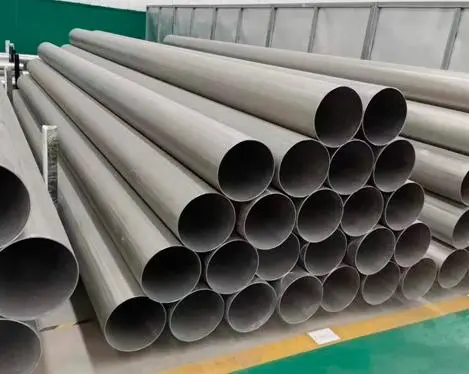
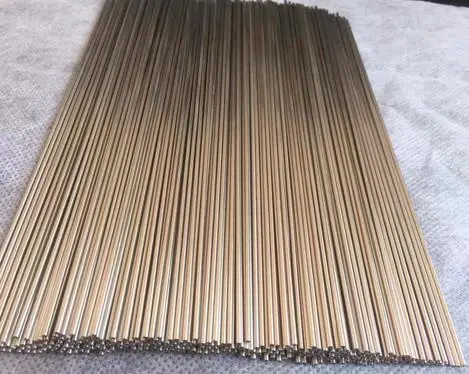
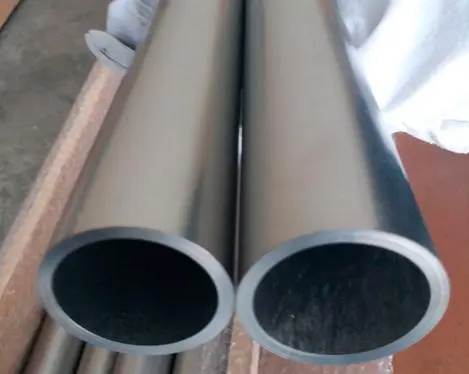
The titanium sintered tube is made of titanium alloy powder through processes such as graded forming, sintering, and mechanical welding. The tube has advantages such as high strength, corrosion resistance, high temperature resistance, good oxidation resistance, high filtration accuracy, and easy regeneration. It is suitable for solid-liquid separation of low viscosity media containing rigid particles The commonly used brands are gr1 and gr2.
Sintered titanium powder filter elements are manufactured by consolidating titanium powder into a porous structure. Their interconnected pores allow fluids or gases to pass through while retaining particles according to the specified filtration rating.
Titanium filter elements are used in selected industrial filtration processes where corrosion resistance, cleanability, and high-temperature capability are required. Element dimensions, pore structure, connection type, and filtration rating can be customized according to operating conditions.
| Item | Specifications |
|---|---|
| Material | Titanium powder |
| Outside diameter | 30, 50, 60, 80 mm |
| Standard lengths | 5, 10, 20, 30, 40 inches and other lengths on request |
| Filtration rating | 0.22–100 μm, subject to product availability and testing |
| Porosity | 28–50% |
| Maximum operating temperature | Up to 280°C, subject to operating conditions |
| Connection types | DOE (Double Open End, if applicable), M20, M30, and other customized connections |
| Customization | Available according to drawings and technical requirements |
Note: Confirm whether the filtration rating is nominal or absolute. Maximum temperature, pressure rating, filtration performance, and chemical compatibility depend on the filter design, operating medium, and service conditions.
Titanium offers good corrosion resistance in many industrial environments. Compatibility depends on the chemical composition, concentration, temperature, and flow conditions of the process medium. Suitability should be evaluated before use in strong acids, alkaline solutions, or oxidizing environments.
The interconnected porous structure enables fluid or gas flow while retaining suspended particles. Available filtration ratings range from fine filtration to coarser particle removal. Actual filtration efficiency depends on pore structure, particle characteristics, flow rate, and the specified test method.
Titanium filter elements may be suitable for elevated-temperature applications. A maximum temperature of 280°C should be treated as a product-specific limit and verified against the operating medium, pressure, connection design, and thermal cycling requirements.
The sintered structure provides a rigid porous element suitable for selected industrial filtration applications. Depending on the retained contaminants and process conditions, the element may be cleaned and reused through backwashing, chemical cleaning, or ultrasonic cleaning.
Cleaning procedures should be selected according to the filter material, process medium, and contaminant type.
A porous titanium element can provide relatively low flow resistance when its pore structure and filtration rating are properly matched to the application. The actual pressure drop depends on the element dimensions, fluid viscosity, flow rate, and accumulated contaminants.
A stated initial differential pressure of 0.03 MPa should be accompanied by the corresponding flow rate and test conditions.
Pretreatment filtration for reverse osmosis systems
Filtration in deionized-water preparation systems
Selected process-fluid filtration
Filtration of beverages and other process liquids
Filtration of selected raw materials and process water
Food-contact applications require appropriate material and hygienic design verification.
Filtration of compatible solvents and process liquids
Acid-cleaning and chemical-processing systems
Filtration in ultrasonic cleaning and high-pressure cleaning processes, where suitable
Selected process-liquid filtration
Filtration systems involving hot-water cleaning or steam cleaning, subject to equipment and process validation
For pharmaceutical or sterile applications, the filter element must meet the required cleanliness, compatibility, integrity-testing, and validation requirements. A porous titanium element is not automatically suitable for sterile filtration.
Electroplating solution filtration
Metalworking-fluid filtration
Filtration of selected photosensitive chemicals and industrial media
Filtration of compatible magnetic-material processing fluids
Customized filter elements can be evaluated according to the following requirements:
Outside diameter and length
Filtration rating and pore-size requirements
Porosity and permeability
Connection type and dimensions
Operating temperature and pressure
Process medium and chemical compatibility
Cleaning method and reuse requirements
Please provide a drawing or operating specification for technical evaluation and quotation.



No.26 Baotai Road, Weibin District, Baoji City, Shaanxi, China.
No.26 Baotai Road, Weibin District, Baoji City, Shaanxi, China.