English
 한국어
 Deutsch
 Español
 العربية
 русский
×
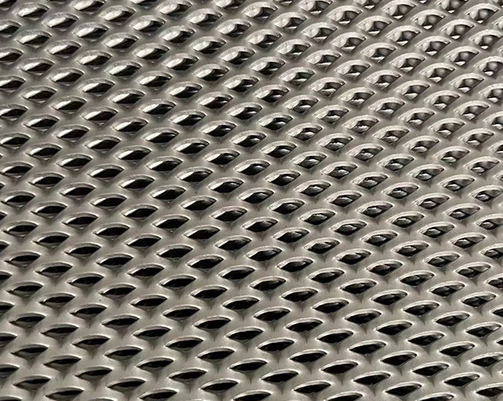
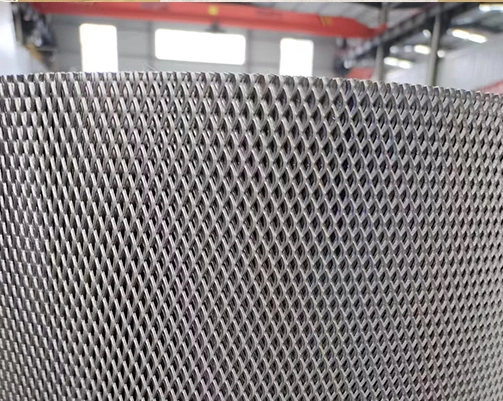
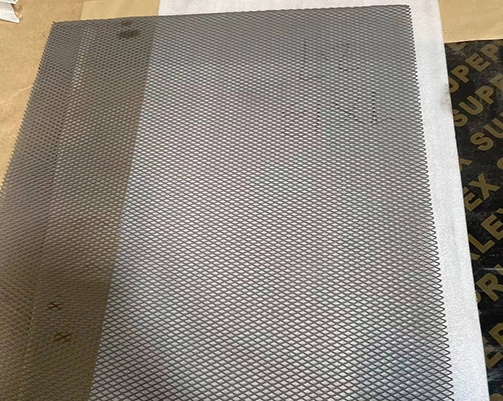
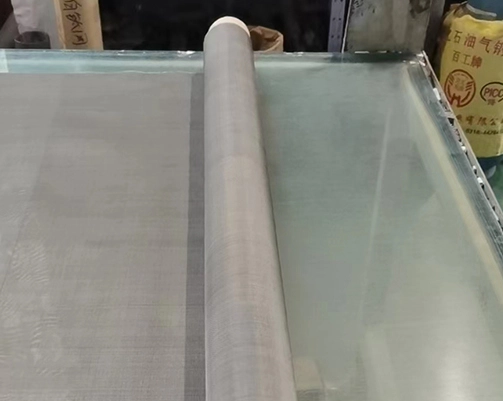
Titanium mesh sheet is divided into two types: titanium stretched mesh sheet and titanium woven wire mesh sheet. Titanium stretched mesh sheet is produced by mechanical processing of molds, with diamond shaped holes. Titanium woven wire mesh sheet is a mesh made of titanium wire, the hole is a square.
Titanium mesh sheets are available in expanded and woven structures for filtration, electrochemical systems, chemical processing, and other industrial applications. Depending on the manufacturing method, titanium mesh can provide different opening geometries, open areas, mechanical properties, and flow characteristics.
Common materials include commercially pure titanium Grade 1 and Grade 2, while Grade 5 titanium alloy is available for selected woven mesh applications. Material selection depends on the required strength, corrosion resistance, operating environment, and application.
Titanium expanded mesh is manufactured by slitting and stretching titanium sheet to form a network of interconnected diamond-shaped openings. It is a continuous mesh structure without the separate woven wires found in woven mesh.
| Parameter | Specification |
|---|---|
| Material | Grade 1, Grade 2 commercially pure titanium |
| Thickness | 0.1 mm and above |
| Opening shape | Diamond |
| Opening sizes | 0.3 × 0.5 mm, 1 × 2 mm, 2 × 3 mm, 3 × 6 mm, 4 × 8 mm, 5 × 10 mm, and other sizes upon request |
| Surface finish | Pickled surface |
| Manufacturing process | Slitting and stretching |
| Customization | Sheet dimensions, thickness, opening size, and configuration |
Titanium expanded mesh offers an open structure, a relatively large exposed surface area, and interconnected strands. Its properties make it suitable for applications requiring fluid or gas passage, electrode support, or lightweight mesh structures.
Typical applications include:
Titanium anode substrates and electrode components for selected electrochemical systems
Current collectors and conductive mesh components, where the design and electrical requirements are suitable
Filter supports and industrial filtration components
Titanium mesh baskets for chemical processing and electrochemical operations
Corrosion-resistant mesh components for industrial equipment
The suitability of titanium expanded mesh depends on the titanium grade, mesh geometry, coating requirements, and operating conditions.
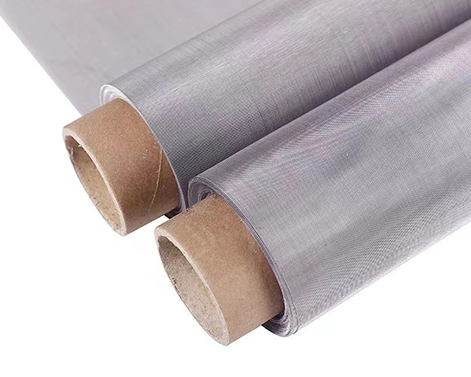
Titanium woven mesh is produced by interlacing titanium wires in different weaving patterns. It is available in different mesh counts, wire diameters, and opening sizes to meet filtration, screening, and other industrial requirements.
| Parameter | Specification |
|---|---|
| Material | Grade 1, Grade 2, Grade 5 titanium |
| Wire diameter | 0.05–2.0 mm, subject to specification |
| Mesh count | 0.5–300 mesh, depending on wire diameter and opening requirements |
| Opening shape | Typically square |
| Weaving patterns | Plain weave, twill weave |
| Surface finish | As woven, pickled, or other available finishes |
| Customization | Wire diameter, mesh count, opening size, width, length, and weaving pattern |
Titanium woven mesh combines the properties of titanium with a flexible wire-based structure. Depending on the grade and service environment, it can offer corrosion resistance and suitability for selected elevated-temperature applications.
Typical applications include:
Industrial filters and screening components
Filter elements and mesh supports
Electrochemical equipment and current-collecting components
Chemical and petrochemical processing equipment
Pharmaceutical and laboratory equipment, where material compatibility requirements are met
Selected high-temperature vacuum equipment
Corrosion-resistant mesh components for industrial machinery
Titanium mesh is used in applications where an open structure, low weight, and corrosion resistance are important. The appropriate mesh type depends on the required opening size, mechanical strength, electrical performance, and operating environment.
Expanded titanium mesh can serve as a substrate or structural support for coated titanium anodes, including mixed metal oxide (MMO) anodes used in suitable electrochemical processes. Mesh geometry and coating specifications should be selected according to the operating current, electrolyte, and electrode design.
Woven titanium mesh can be used for screening, filtration, and support structures in selected chemical and industrial processes. Mesh count and wire diameter determine the opening size and influence flow and particle retention.
Titanium mesh may be used in selected corrosive environments, depending on the titanium grade, chemical composition, concentration, and temperature. It can be incorporated into filter assemblies, baskets, and other process components.
Specially designed titanium mesh is used in certain dental and orthopedic procedures, including guided bone regeneration and bone augmentation. These applications require products manufactured and qualified for the relevant medical use; ordinary industrial titanium mesh should not be assumed suitable for implantation.
Titanium mesh may be considered for selected lightweight structures and specialized equipment where its mechanical and corrosion-resistant properties meet the design requirements.
Titanium expanded mesh and woven mesh can be supplied in different grades, dimensions, opening sizes, and surface conditions, subject to manufacturing feasibility.
To identify a suitable specification, please provide the titanium grade, mesh type, sheet or roll dimensions, opening size or mesh count, wire or sheet thickness, surface requirements, and intended application.

No.26 Baotai Road, Weibin District, Baoji City, Shaanxi, China.
No.26 Baotai Road, Weibin District, Baoji City, Shaanxi, China.