English
  한국어
한국어  Deutsch
  Español
  العربية
  русский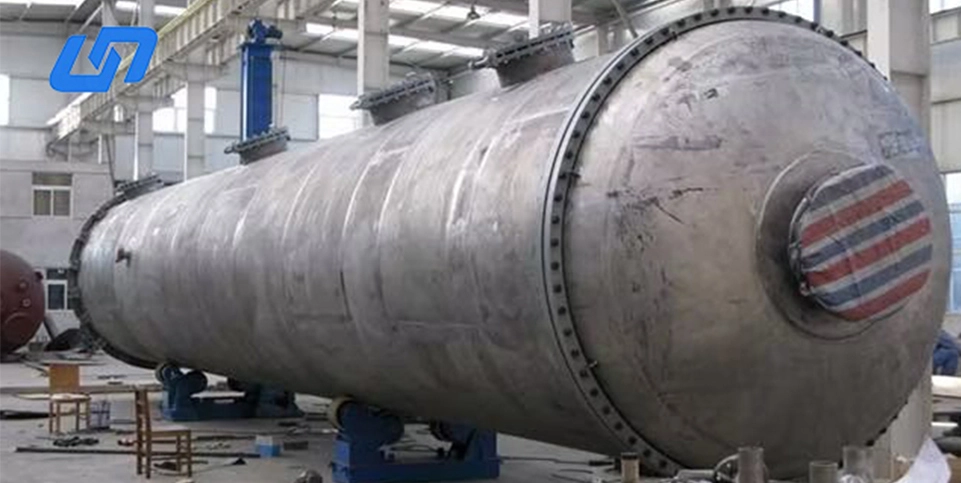
×
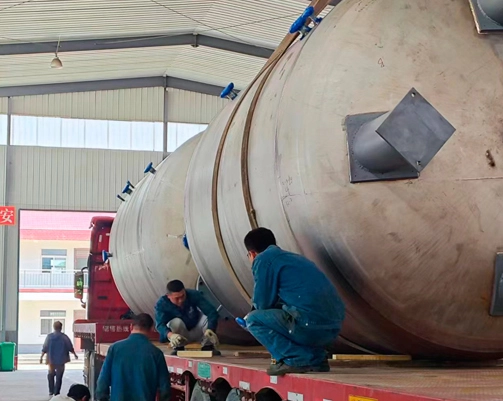
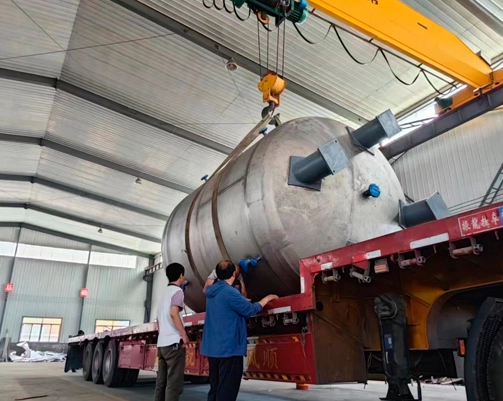
Before the medium is sterilized, it is usually sterilized by the fermented tank air filter and blow dry with the air. After feeding, start stirring to prevent precipitation. Then turn on the fixture steam valve, slowly introduce the steam, so that the ingredients are warmed to about 80℃ and turn off the fixture steam valve. Open the three roads (air, disbursement, sampling) into the auto valve, and open the auto valve. When the temperature rises to 110℃, control the in-entry and exit valve until 121℃ (table voltage 0.1 ~ 0.15MPa), and start thermal insulation, generally heat preservation for 20 minutes. After the heat preservation, turn off the filter exhaust valve and the steam valve. Turn off the sewer valve and turn on the cooling water into the water return valve. When the tank is lower than the pressure of the filter, turn on the air intake valve and introduce sterile air. Then cooling water to reduce the temperature of the medium to the cultivation temperature.
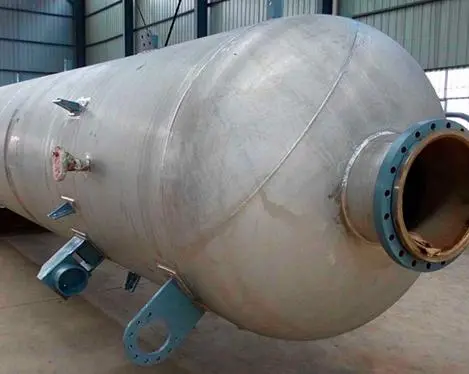
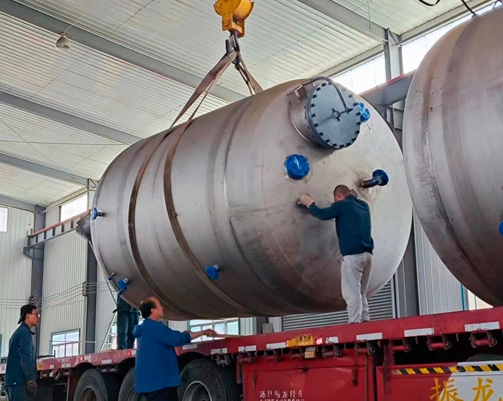
The Titanium Coil Heat Exchanger is specifically designed for pharmaceutical sterilization processes involving betaine solutions. Manufactured entirely from Grade 2 titanium, the equipment provides outstanding corrosion resistance, excellent heat transfer performance, and long-term operational reliability in demanding pharmaceutical environments.
Titanium's superior resistance to organic acids, alkaline solutions, inorganic salts, and various chemical compounds makes it an ideal material for sterilization systems where purity, cleanliness, and equipment longevity are critical.
The unit utilizes a coiled tube design that maximizes heat transfer efficiency while maintaining compact equipment dimensions, making it suitable for continuous pharmaceutical production lines.
Betaine sterilization systems
Pharmaceutical intermediate processing
Biochemical production
Sterile liquid heating and cooling
Corrosion-resistant process systems
| Parameter | Specification |
|---|---|
| Application | Betaine Sterilization |
| Heat Exchanger Type | Titanium Coil Heat Exchanger |
| Tube Material | Titanium Grade 2 |
| Shell Material | Titanium Grade 2 |
| Heat Transfer Area | 12.4 m² |
| Equipment Weight | 2,780 kg |
| Tube Side Medium | Circulating Water |
| Shell Side Medium | Betaine |
| Tube Side Design Pressure | 0.09 MPa |
| Shell Side Design Pressure | 0.09 MPa |
| Tube Side Working Pressure | 0.05 MPa |
| Shell Side Working Pressure | 0.05 MPa |
| Hydrostatic Test Pressure | 0.44 MPa |
| Tube Side Design Temperature | 10 – 30°C |
| Shell Side Design Temperature | 10 – 130°C |
The heat exchanger transfers thermal energy between circulating water flowing through the titanium coil tubes and the betaine solution contained within the shell.
During operation:
Circulating water flows through the titanium coil.
Betaine solution flows through the shell side.
Heat is transferred through the titanium tube walls.
The required sterilization temperature is achieved and maintained.
Process temperature remains stable through continuous heat exchange.
The coiled tube configuration increases the heat transfer surface area and promotes efficient thermal exchange while minimizing equipment footprint.
Titanium Grade 2 offers a unique combination of corrosion resistance, mechanical strength, and process reliability.
Titanium performs exceptionally well in:
Organic acids
Alkaline solutions
Inorganic salts
Pharmaceutical intermediates
Chemical processing fluids
Unlike conventional stainless steel equipment, titanium maintains excellent performance even under prolonged exposure to corrosive media.
Titanium does not contaminate process fluids, making it ideal for pharmaceutical and biotechnology applications where product purity is critical.
Titanium provides high strength with lower density, reducing overall equipment weight while maintaining structural integrity.
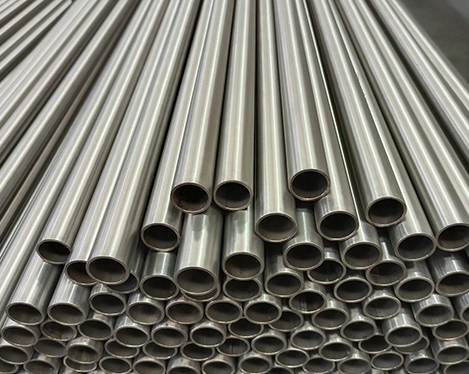
Both shell and coil tubes are manufactured from Grade 2 titanium, ensuring maximum corrosion resistance throughout the entire system.
The coiled tube design provides:
Large heat transfer surface area
Enhanced thermal efficiency
Uniform temperature distribution
Compact equipment layout
Suitable for:
Continuous operation
Sterilization processes
Clean process environments
Long-term service
Titanium's resistance to corrosion and scaling significantly reduces maintenance frequency and operating costs.
Shell: Titanium Grade 2
Coil Tube: Titanium Grade 2
Depending on process conditions, alternative titanium grades can be supplied:
| Material | Characteristics |
|---|---|
| Grade 2 Titanium | General corrosion resistance |
| Grade 7 Titanium | Enhanced resistance to reducing acids |
| Grade 12 Titanium | Improved strength and corrosion resistance |
Titanium provides exceptional resistance against process media commonly found in pharmaceutical and chemical industries.
The coil configuration improves heat transfer effectiveness while maintaining stable process temperatures.
Designed according to pressure vessel requirements with hydrostatic testing performed at 0.44 MPa.
Maintains consistent sterilization conditions and reliable heat transfer performance.
Each heat exchanger undergoes strict quality control procedures, including:
Raw material certification
Welding inspection
Dimensional inspection
Hydrostatic pressure testing
Leak testing
Surface quality inspection
Final performance verification
Visual inspection of titanium surfaces
Monitoring for fouling or scaling
Verification of operating pressures and temperatures
Periodic cleaning helps maintain maximum heat transfer efficiency. Non-abrasive cleaning methods are recommended to preserve the titanium surface.
Regular inspection of seals, flanges, and connections ensures long-term operational reliability.
Titanium coil heat exchangers are widely used in:
Sterilization systems
Drug manufacturing
Bioprocessing
Corrosive chemical heating
Acid and alkali processing
Specialty chemical production
Hygienic heat transfer systems
Process cooling and heating
Wastewater treatment
Chemical dosing systems

No.26 Baotai Road, Weibin District, Baoji City, Shaanxi, China.
No.26 Baotai Road, Weibin District, Baoji City, Shaanxi, China.