English
 한국어
 Deutsch
 Español
 العربية
 русский
×

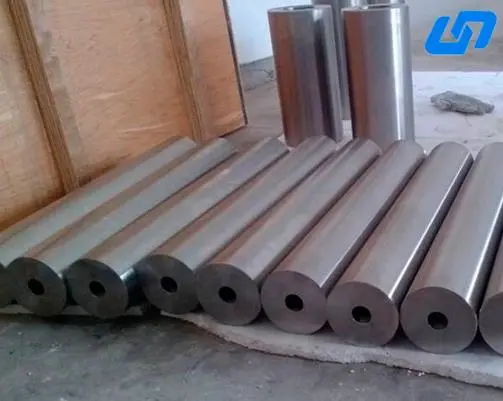

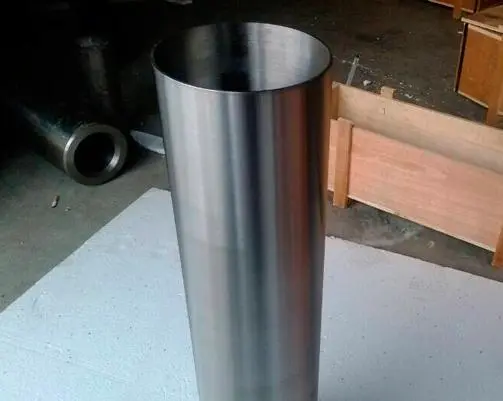
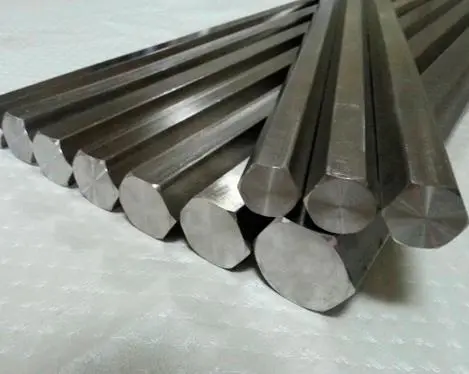
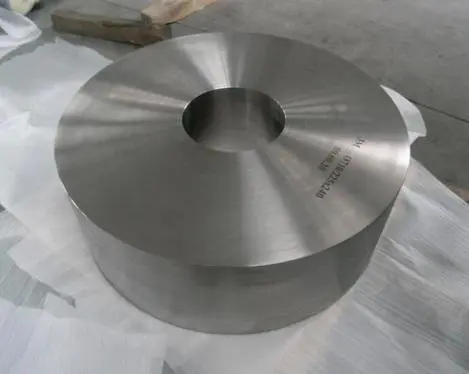
Titanium hollow bar is actually titanium bar with hollow. Its main manufacturing process is forging, followed by internal and external surface treatment. The common grades are gr1 gr2 gr5 gr7 gr9 gr12, etc.
| Item | Specifications |
|---|---|
| Product type | Titanium hollow bars and hollow forgings |
| Material grades | According to order requirements |
| Applicable standards | ASTM B348, ASTM B381, AMS 4928, subject to grade and product form |
| Manufacturing processes | Forging, extrusion, machining, and other processes as required by the product design |
| Quality inspection | Chemical composition, mechanical properties, ultrasonic testing, and dimensional inspection as specified |
| Surface finish | Machined or polished inner and outer surfaces |
| Outer surface roughness | Ra ≤ 3.2 μm, subject to order requirements |
| Chamfer radius | R5–15 mm, subject to drawing requirements |
| Size range | Outer diameter (mm) | Inner diameter (mm) | Height (mm) |
|---|---|---|---|
| Range 1 | 200–400 | 100–300 | 400–700 |
| Range 2 | 400–700 | 150–500 | 700–1500 |
| Range 3 | 700–1500 | 300–1200 | 40–600* |
Please confirm the height range for the third size group. Custom dimensions can be evaluated according to drawings and production requirements.
Titanium hollow forgings can be produced through suitable forging and forming routes, followed by machining to achieve the required dimensions and surface finish.
Depending on the product design and manufacturing process, forging or extrusion may be used to produce hollow preforms. Subsequent machining can establish the specified inner diameter, outer diameter, height, and dimensional tolerances.
The manufacturing route is selected according to the titanium grade, component dimensions, required mechanical properties, and applicable product specification.
Inspection can include the following items according to the purchase order and applicable standard:
Chemical composition analysis
Mechanical property testing
Ultrasonic testing (UT), where specified
Dimensional and surface inspection
Additional inspections or documentation as agreed with the customer
Titanium hollow forgings combine relatively low density with high specific strength and corrosion resistance in suitable service environments. They can be considered for applications where weight, corrosion resistance, and component geometry are important.
Typical application areas include:
Aerospace: Selected structural and machined components, subject to material and qualification requirements
Chemical and petrochemical processing: Corrosion-resistant equipment components
Oil and gas: Selected components for demanding operating environments
Marine and seawater desalination: Components exposed to seawater or other corrosive media
Power generation and metallurgy: Specialized equipment components
Industrial machinery: Custom hollow components manufactured to customer drawings
Titanium has a density of approximately 4.51 g/cm³ and a melting point of around 1,668°C. Its performance at elevated temperatures depends on the alloy, operating conditions, and component design.
For a quotation, please provide the material grade, outer diameter, inner diameter, height, applicable standard, heat-treatment condition, and inspection requirements.



No.26 Baotai Road, Weibin District, Baoji City, Shaanxi, China.
No.26 Baotai Road, Weibin District, Baoji City, Shaanxi, China.