English
 한국어
 Deutsch
 Español
 العربية
 русский
×
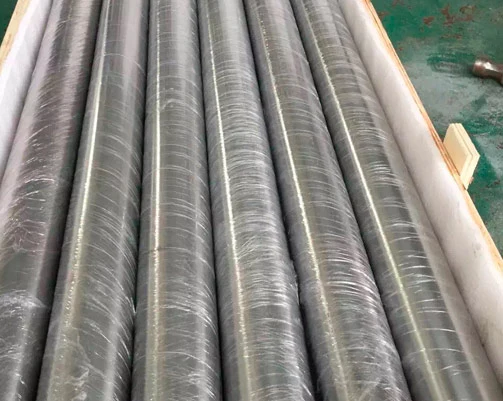

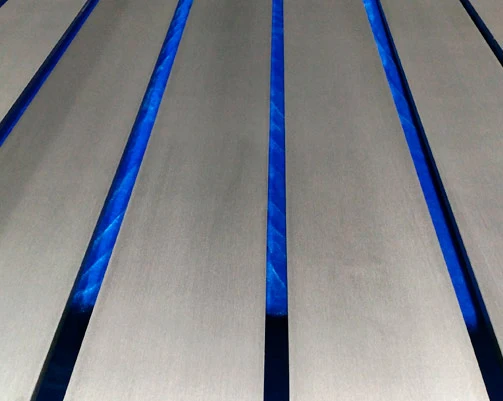
A titanium sputtering target is installed on the vacuum deposition machine for coating. It can be plated with conductive film, insulating film, decorative film, superhard film, lubricating film, magnetic film, and other functional films. It is a material used to manufacture thin films using sputtering deposition or thin film deposition technology. In this process, the sputtering target material starts as a solid, which is decomposed into tiny particles by gas ions, forming a spray and covering another material.
Changsheng Titanium supplies titanium sputtering targets and selected pure metal and alloy targets for thin-film deposition, coating, and materials research. Targets can be manufactured in different shapes, dimensions, and compositions according to customer drawings and application requirements.
| Target Type | Materials / Composition | Purity |
|---|---|---|
| Pure metal targets | W, Mo, Zr, Ta, Nb, Ni, Ti, Cr, Al, Cu, Si, Hf | 2N5–5N (99.5%–99.999%), depending on material and specification |
| Alloy targets | Ti-Al, Si-Al, Cr-Al, Cr-Si, W-Ti, Ni-Cr, Ti-Zr, Ti-Si, Ti-Nb, Nb-Zr, Nb-W-Zr, Ti-Al-Si | To be confirmed according to composition and impurity requirements |
Available alloy compositions
| Alloy System | Example Composition Ratios |
|---|---|
| Ti-Al | 50:50, 80:20, 70:30, 60:40, 33:67 at% |
| Si-Al | 90:10, 70:30, 50:50 wt% |
| Cr-Al | 30:70, 50:50, 70:30 at% |
| Cr-Si | 50:50 wt% |
| W-Ti | 90:10 wt% |
| Ni-Cr | 80:20 wt% |
| Other alloys | Ti-Zr, Ti-Si, Ti-Nb, Nb-Zr, Nb-W-Zr, Ti-Al-Si |
Note: at% represents atomic percentage, while wt% represents weight percentage. Confirm the composition basis and target purity for each order. Alloy compositions not listed above may be evaluated upon request.
| Target Type | Typical Dimensions |
|---|---|
| Disc targets | Diameters: 60, 65, 95 and 100 mm; thicknesses: 30, 32, 40 and 45 mm, subject to confirmation of available combinations |
| Planar targets | Maximum width: 300 mm; maximum length: 3,000 mm |
| Tubular targets | OD 70 × WT 7 × L mm; OD 80 × WT 8 × L mm |
| Tubular targets | OD 127 × ID 105 × L mm; OD 146 × ID 136 × L mm |
| Tubular targets | OD 219 × ID 194 × L mm; OD 300 × ID 155 × L mm |
Other dimensions and configurations can be evaluated according to customer drawings and technical requirements.
OD = outside diameter; ID = inside diameter; WT = wall thickness; L = length.
Sputtering targets are used to deposit thin films on substrates for a variety of industrial and research applications, including:
Architectural and automotive glass: Functional and decorative coatings, including selected low-emissivity and solar-control coating systems.
Electronics and semiconductors: Thin-film layers for electronic components and semiconductor-related processes.
Optical coatings: Functional films for optical components and devices.
Solar photovoltaic technology: Thin-film deposition for selected photovoltaic applications.
Decorative coatings: Metallic finishes on components, consumer products, and moulds.
Wear-resistant coatings: Coatings designed to improve surface hardness and wear performance, depending on the target composition and deposition process.
The appropriate target material depends on the required film composition, substrate, deposition equipment, and process parameters.
The manufacturing route depends on the target material, composition, dimensions, and required microstructure. Available or applicable processes may include:
Powder metallurgy: Powder consolidation and, where specified, hot isostatic pressing (HIP).
Melting and machining: Melting, forging, drilling, and precision machining for suitable materials and geometries.
Thermal spraying: A coating process for applicable materials and applications; it is distinct from conventional sputtering target production.
Target bonding: Bonding the target to a backing plate or other specified support when required by the deposition system.
The manufacturing method and target-to-backing-plate bonding requirements should be confirmed for each product.
Depending on the material and inspection requirements, analysis and inspection may include:
Optical emission spectroscopy
Plasma-based elemental analysis, such as ICP-OES where available
Atomic absorption spectroscopy
Scanning electron microscopy (SEM)
X-ray diffraction (XRD)
Available methods depend on the required elements, detection limits, sample preparation, and inspection specification. Specific testing and reporting requirements can be agreed upon before production.
Target purity and elemental composition should meet the agreed specification. Trace impurities can affect film properties and process performance, particularly in applications with stringent contamination limits.
Density and internal integrity are important for suitable target materials and manufacturing routes. Requirements may include theoretical-density targets, porosity limits, or other acceptance criteria defined by the customer.
Grain size, grain-size distribution, phase structure, and material uniformity can influence sputtering behavior and deposited-film characteristics. Requirements should be matched to the target material and deposition process.
Target dimensions, flatness, surface finish, and bonding quality should meet the requirements of the intended deposition equipment. Bonded targets may require additional inspection according to the agreed specification.
Changsheng Titanium can evaluate custom target requirements for commercial coating applications and materials research.
Please provide the following information for technical evaluation and quotation:
Target material and grade
Required purity and maximum impurity levels
Alloy composition and whether the ratio is specified in at% or wt%
Target shape, dimensions, and tolerances
Required density and microstructure
Bonding or backing-plate requirements
Applicable standard, inspection requirements, and intended application
Custom compositions, target geometries, and manufacturing routes are subject to technical review and production feasibility.

No.26 Baotai Road, Weibin District, Baoji City, Shaanxi, China.
No.26 Baotai Road, Weibin District, Baoji City, Shaanxi, China.