English
 한국어
 Deutsch
 Español
 العربية
 русский
×
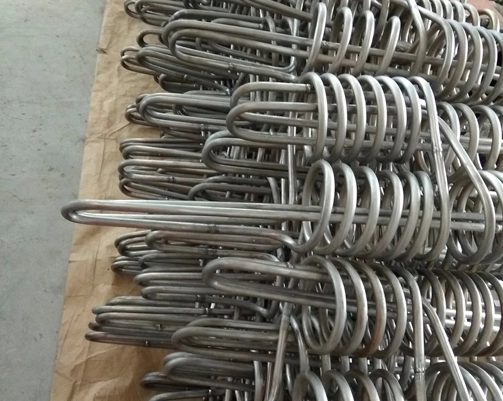
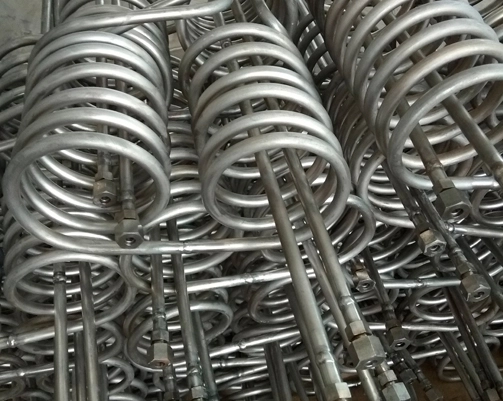
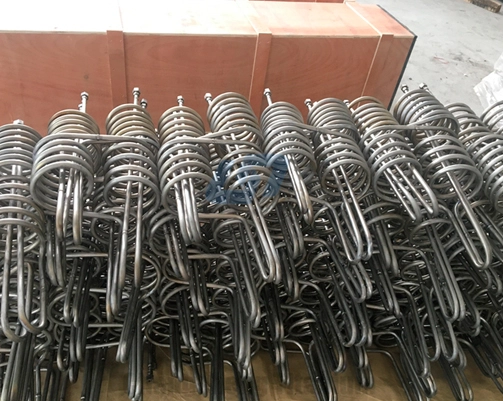
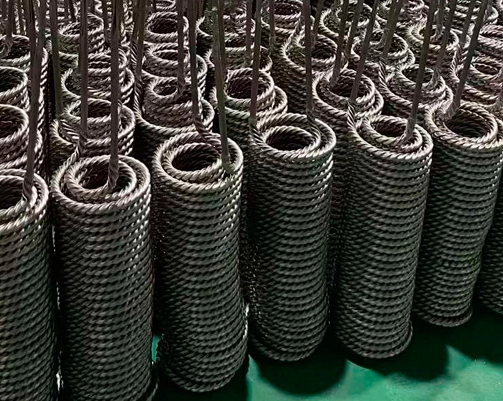
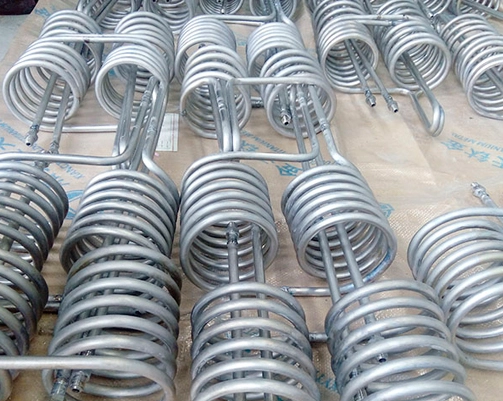
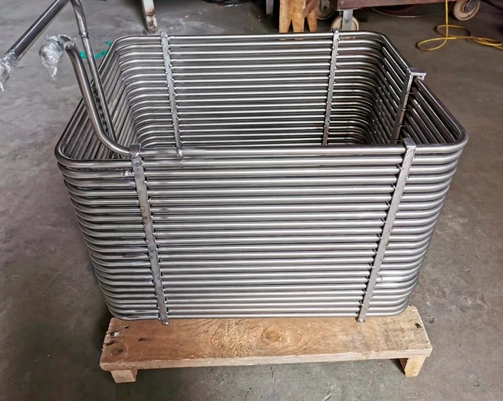
Titanium is very stable in many media, such as oxidizing, neutral, and weakly reducing media. It is corrosion-resistant and can be used in environments with medium temperatures below 315 ℃. Titanium coil tubing is mainly used for heating and cooling containers. The fixation methods of titanium coils is divided into two types: detachable and non detachable, which depend on the medium of the material and the corrosion of the titanium coils. However, in the design, detachable types are mainly used to facilitate the maintenance and cleaning of titanium coil tubing.
Titanium coil tubes are manufactured from titanium and titanium alloy tubing formed into coils or other specified configurations. They are used for heat transfer, fluid circulation, and process applications where corrosion resistance, low weight, and compact installation are important.
Baoji City Changsheng Titanium Co., Ltd. supplies titanium coil tubes in selected grades, dimensions, and configurations. Custom sizes and coil designs can be evaluated according to customer drawings and operating requirements.
| Item | Specifications |
|---|---|
| Material grades | Grade 1, Grade 2, Grade 7, Grade 12 |
| Tube dimensions (OD × wall thickness × length) | 9 × 0.6 × L mm; 12.7 × 0.9 × L mm; 16 × 0.9 × L mm; 25 × 2 × L mm; 38.1 × 2 × L mm; 45 × 3 × L mm; 57 × 3 × L mm; 89 × 4 × L mm |
| Standard | ASTM B338, subject to grade, product form, and order requirements |
| Tube type | Seamless or welded, subject to availability and specification |
| Coil configuration | Custom-made according to drawings and technical requirements |
| Length and dimensions | To be confirmed according to the required coil design |
Note: The dimensions above are nominal examples. Please confirm the available tube sizes, minimum bending radius, coil diameter, total tube length, dimensional tolerances, and applicable standard before ordering.
Titanium coil tubes can be supplied in different shapes and configurations according to installation space and process requirements.
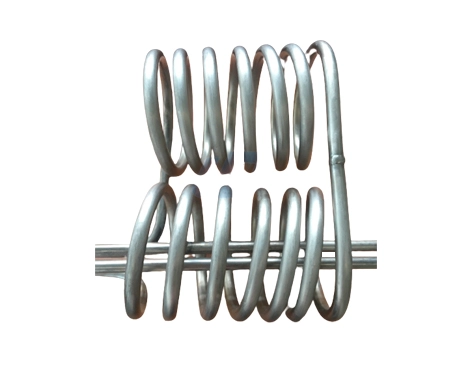
Circular titanium coils: Coiled tubing for compact heat-transfer and fluid-handling arrangements.
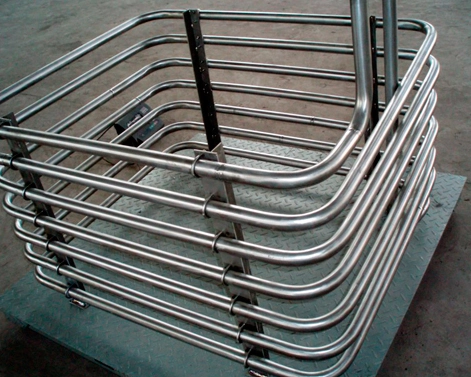
Serpentine titanium coils: Tubing formed into repeated bends for specific equipment layouts.
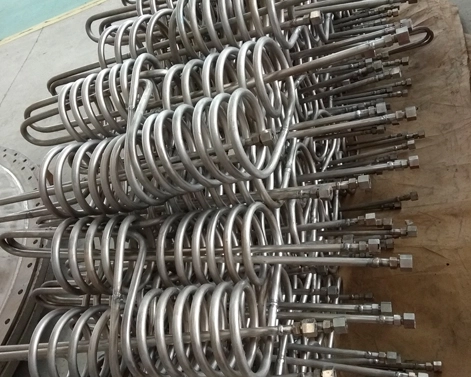
U-shaped titanium tubes: U-bend configurations used in selected heat-exchange applications.
Custom-shaped coils: Other configurations manufactured according to customer drawings, subject to technical feasibility.
Single-layer and multi-layer coils: Configurations selected according to space limitations and required heat-transfer area.
For complete heat exchangers or other equipment assemblies, the design and supply scope should be confirmed separately.
Titanium offers good corrosion resistance in many environments, including seawater and selected chemical process media. The suitability of a particular grade depends on the chemical composition, concentration, temperature, flow conditions, and other operating factors.
Coiled tubing can provide a long flow path within a relatively compact space. The coil geometry can be customized to suit installation requirements and available space.
Titanium has a density of approximately 4.51 g/cm³, helping reduce component weight compared with many conventional metallic materials of similar dimensions.
Titanium tubing can be used in heat-transfer applications where corrosion resistance and compact construction are important. Actual heat-transfer performance depends on tube dimensions, fluid properties, flow rate, surface condition, and equipment design.
Titanium coil tubes are used in selected industrial applications, including:
Chemical processing equipment
Seawater desalination and marine systems
Chlor-alkali production
Salt production and brine processing
Power generation and industrial heat exchange
Metallurgical processing
Titanium dioxide and other chemical manufacturing processes
Production of specialty chemicals, pesticides, and chemical intermediates
Material grade and coil design should be selected according to the process medium, operating temperature, pressure, and required service life.

No.26 Baotai Road, Weibin District, Baoji City, Shaanxi, China.
No.26 Baotai Road, Weibin District, Baoji City, Shaanxi, China.