English
  한국어
한국어  Deutsch
  Español
  العربية
  русский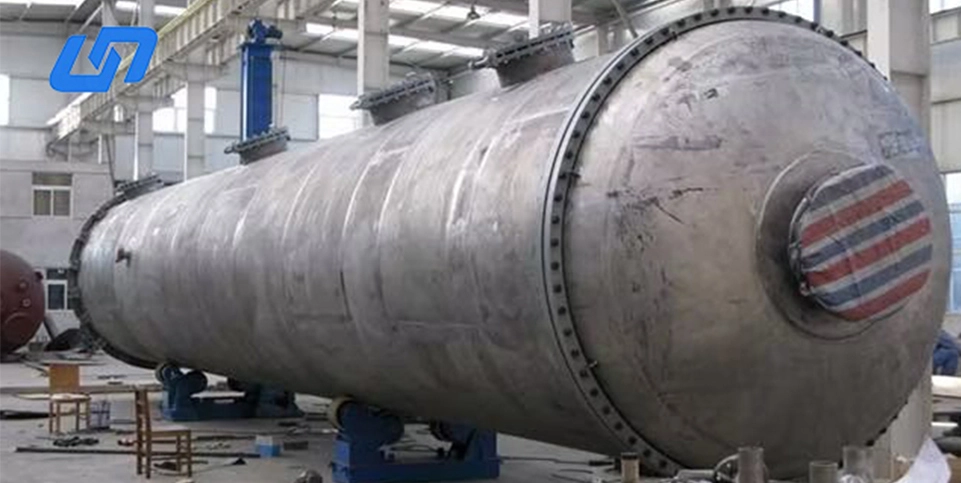
×
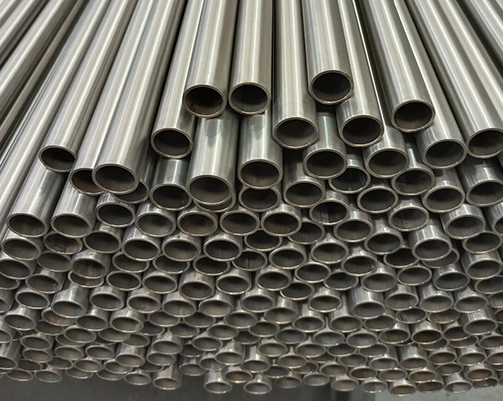
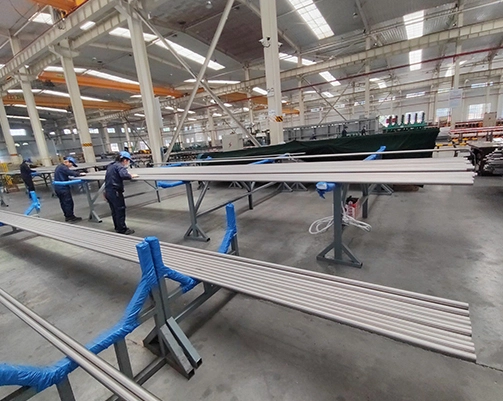
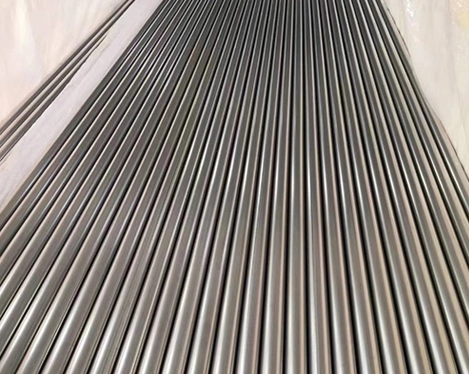
Seamless Titanium pipes are light-weight and have high strength, and are widely used in chemical and marine fields, such as titanium heat exchangers, titanium pipelines under the sea, titanium pipe fittings and other products.
Seamless titanium pipes are widely used across industries that require materials with high strength, corrosion resistance, and superior performance under extreme conditions. These pipes are particularly valuable in highly corrosive environments and high-temperature applications.
| Item | Details |
|---|---|
| Outside Diameter | 5 mm – 600 mm |
| Wall Thickness | 0.8 mm and above |
| Max Length | 15 meters |
| Production Standards | ASTM B337, ASTM B338, ASME B338, ASTM B861 |
High Specific Strength:
Titanium has a high strength-to-weight ratio, making it ideal for lightweight, high-strength applications.
High Hardness:
The material's hardness makes it suitable for applications requiring wear resistance.
Low Elastic Modulus:
Titanium’s elastic modulus is relatively low compared to other metals, which can be advantageous in certain structural applications.
Excellent High and Low Temperature Performance:
High-Temperature Resistance: Titanium alloys maintain good mechanical properties even at temperatures as high as 550-600°C, which is higher than many other metals, including aluminum alloys.
Low-Temperature Resistance: Titanium alloys can maintain performance at temperatures as low as -253°C, making them ideal for cryogenic environments.
Superior Corrosion Resistance:
Oxidizing media such as atmosphere, seawater, nitric acid, sulfuric acid, and strong alkalis.
Titanium's resistance to corrosion is superior to most stainless steels, making it an ideal choice for harsh environments.
Titanium forms a protective oxide film when exposed to air at temperatures below 550°C, enhancing its resistance to oxidation and corrosion. It exhibits excellent corrosion resistance in:
Chemical Industry:
Titanium is highly stable in various acids, alkalis, and salts (except for a few specific acids like mineral acids and aluminum chloride).
In the chlor-alkali industry, titanium is used for metal anodes and wet chlorine gas coolers, resulting in significant economic benefits due to the material’s excellent corrosion resistance.
Petroleum Industry:
Titanium shows exceptional stability in organic compounds, except for a few organic acids.
It is used to manufacture heat exchangers, reactors, high-pressure vessels, and distillation towers in petroleum refining and chemical processing.
Fertilizer Industry:
In urea production, titanium’s resistance to high-temperature corrosion significantly extends the service life of equipment.
Titanium pipes replace stainless steel, reducing maintenance costs and downtime in environments where ammonia, ammonium carbamate, and other corrosive substances are present.
Seawater Desalination & Shipbuilding:
Titanium’s superior seawater corrosion resistance makes it the material of choice for seawater desalination plants and shipbuilding.
It is used in critical components such as heat exchangers and cooling systems due to its strength and lightness in seawater environments. Titanium is also widely used in deep-water submarines and marine vessels for structural components.
Electric Power Industry:
In fossil fuel power stations, titanium is used for cooling pipes in heat exchangers, particularly in systems that handle corrosive hot water containing chlorides and sulfides.
Titanium pipes replace copper-nickel alloys, improving service life and reducing maintenance time, resulting in substantial cost savings and operational efficiency.
Corrosion Resistance: Titanium excels in environments where other metals fail, including exposure to seawater, chlorine, acids, and alkalis.
High Strength: Titanium’s high specific strength ensures durability without compromising weight, ideal for use in high-performance industries.
Wide Temperature Tolerance: Titanium pipes can handle extreme temperatures, from cryogenic to high-heat environments.
Low Maintenance: The durability and corrosion resistance of titanium reduce the need for frequent repairs and replacements, offering long-term economic benefits.
| Specification | Details |
|---|---|
| Outside Diameter | 5 mm – 600 mm |
| Wall Thickness | 0.8 mm and above |
| Length | Max 15 meters |
| Production Standards | ASTM B337, ASTM B338, ASME B338, ASTM B861 |

No.26 Baotai Road, Weibin District, Baoji City, Shaanxi, China.
No.26 Baotai Road, Weibin District, Baoji City, Shaanxi, China.