English
  한국어
한국어  Deutsch
  Español
  العربية
  русский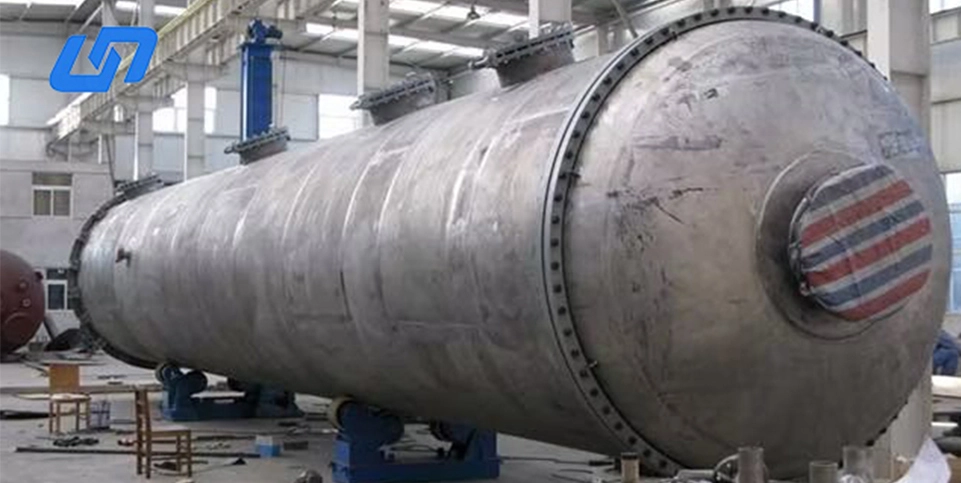
×
Titanium Alloys are primarily composed of titanium (Ti) combined with various alloying elements such as aluminum (Al), vanadium (V), iron (Fe), nickel (Ni), and others. These alloying elements significantly improve the mechanical properties and corrosion resistance of the titanium base metal.
α phase: This phase has a hexagonal close-packed (HCP) structure and provides good strength and corrosion resistance at room temperature.
β phase: This phase has a body-centered cubic (BCC) structure and enhances the material's formability and strength at elevated temperatures.
The ratio of α and β phases in titanium alloys is critical in determining the alloy’s mechanical properties. The α-phase alloys offer high strength and excellent corrosion resistance, while β-phase alloys have higher formability and strength at high temperatures.
Titanium Steel, as a term, generally refers to 316L stainless steel, which is a high-corrosion-resistant alloy containing chromium (Cr), nickel (Ni), and molybdenum (Mo). Despite its name, titanium steel does not actually contain titanium, but its corrosion resistance is superior to regular stainless steel.
Density: ~4.5 g/cm³ (lightweight compared to many other metals).
Yield Strength: Can exceed 1000 MPa (higher-strength variants like Ti-6Al-4V exceed 1200 MPa).
Elongation: Generally above 10%, with some alloys reaching up to 20%.
Fatigue Strength: Titanium alloys possess excellent fatigue resistance, making them ideal for cyclic loading conditions.
Thermal Conductivity: Relatively low (~16.2 W/(m·K)), which contributes to good thermal stability in extreme conditions.
Density: Intermediate between titanium and steel, depending on the exact composition.
Yield Strength: Typically ranges from 800 to 1000 MPa.
Elongation: Typically lower than titanium but higher than many other steels.
Corrosion Resistance: Offers good corrosion resistance, particularly to chloride environments, but not as robust as pure titanium.
| Property | Titanium Alloys | Titanium Steel |
|---|---|---|
| Mechanical Properties | High strength, excellent ductility, and fatigue resistance, especially in aerospace applications | Higher yield strength than pure titanium but lower than titanium alloys |
| Corrosion Resistance | Excellent resistance to most aggressive environments, including seawater and acidic conditions | Good corrosion resistance, but not as good as titanium alloys |
| Biocompatibility | Ideal for biomedical applications, non-toxic and non-allergenic | Not as suitable for biomedical use due to lower biocompatibility |
| High-Temperature Resistance | Excellent high-temperature stability, retaining strength at elevated temperatures | Lower heat resistance than titanium alloys, but sufficient for most applications |
Titanium Alloys: Widely used for structural components, engine parts, and airframes in the aerospace industry due to their high strength-to-weight ratio, excellent corrosion resistance, and ability to perform in extreme temperatures. Titanium alloys make up about 15% of the Boeing 787 Dreamliner.
Titanium Steel: Due to its lower performance, titanium steel has limited applications in aerospace. It might be considered for less critical, cost-sensitive components where pure titanium is not required.
Titanium Alloys: Titanium alloys, such as Ti-6Al-4V, are the material of choice for medical implants (e.g., joint replacements, dental implants) because of their biocompatibility, strength, and fatigue resistance. They do not cause allergic reactions and have excellent long-term durability in the human body.
Titanium Steel: Due to the lower biocompatibility, titanium steel is rarely used in biomedical applications.
Titanium Alloys: Highly valued for their corrosion resistance in harsh environments such as seawater, acidic chemical processing environments, and high-temperature conditions. Used for reactors, heat exchangers, offshore platforms, and desalination plants.
Titanium Steel: Increasingly used in cost-sensitive applications within marine and chemical industries, where the material balance of cost and performance is essential. However, it is less corrosion-resistant than pure titanium alloys, so it is more commonly used in less demanding environments.
Titanium Alloys: Primarily used in high-performance, high-cost applications like aerospace, biomedical implants, and advanced chemical processing. They offer superior corrosion resistance, biocompatibility, and strength, especially in extreme environments.
Titanium Steel: More cost-effective, making it suitable for industrial applications where performance requirements are moderate, such as marine engineering, chemical processing, and heat exchangers. However, it does not offer the same level of corrosion resistance or mechanical properties as titanium alloys.
Both titanium alloys and titanium steel offer unique advantages depending on the application. Titanium alloys are ideal for high-end industries requiring lightweight, high-strength, and corrosion-resistant materials, such as aerospace, biomedical implants, and chemical processing. Titanium steel, on the other hand, serves as a cost-effective alternative for industries that still need good corrosion resistance but are more sensitive to material costs, such as in marine and industrial engineering applications. The choice between the two materials depends on a careful balance of performance requirements, cost constraints, and specific application needs.

No.26 Baotai Road, Weibin District, Baoji City, Shaanxi, China.
No.26 Baotai Road, Weibin District, Baoji City, Shaanxi, China.